





























Brewing via Immersion - Kaapi

How Immersion Brewing Works: French Press, AeroPress and Cold Brew Explained

Most coffee in the world is brewed by drip  water passes through a bed of grounds and the resulting liquid drains away. Brewing via immersion works differently. The grounds and water sit together in a single vessel for a controlled time, the coffee extracts evenly across that time, then the liquid is separated from the grounds at the end. French press, AeroPress, Clever Dripper, cold brew, and the cupping protocol used by professional cuppers are all examples of brewing via immersion. The technique produces a fuller bodied, lower acidity cup than drip and rewards the operator with a forgiving margin of error that drip and espresso do not allow. This guide explains how immersion brewing works, walks through the main immersion brewer formats you can buy through Kaapi Machines, and shows you how to actually make great coffee with each one. Manual brewing equipment for immersion methods is one of the most popular categories of home and cafe coffee gear, and brewing via immersion remains one of the most accessible ways to upgrade your daily cup.

What Immersion Brewing Actually Is

Immersion brewing means coffee grounds and water are immersed together for a controlled time. The water makes contact with all the coffee at once and stays in contact through the brew, slowly extracting flavor compounds until the operator separates grounds from liquid. This is the oldest brewing method in coffee history, predating filter and espresso by centuries  turkish coffee, decoction based brewing, and traditional cupping all use immersion.

Compared to drip brewing where water passes through and out, immersion gives every bean particle the same contact time. Compared to espresso where water under pressure forces extraction in seconds, immersion uses gravity and time. The result is a different cup: rounder body, more soluble compounds extracted, lower acidity, and a forgiving brew that handles small operator inconsistencies without becoming undrinkable.

How Immersion Differs From Drip and Espresso

Three brewing categories cover almost all the coffee made worldwide. Each produces a distinct cup.

Drip brewing. Water passes through a bed of grounds via gravity and drains out, taking the extracted coffee with it. V60 pour over, drip coffee makers, and most batch brewers use drip. Cup is lighter bodied with brighter acidity.

Espresso. Hot water under 9 bar pressure forces extraction through a tightly compressed puck of fine grounds in 25 to 35 seconds. Cup is concentrated, intense, syrupy.

Immersion brewing. Grounds and water sit together for 1 to 4 minutes (or up to 12 hours for cold brew), then are separated. Cup is fuller bodied, rounder, lower acidity, and tends to highlight different tasting notes than the same bean produces on drip.

Most serious coffee programmes operate methods from more than one category. A specialty cafe might run espresso plus pour over (drip) plus French press (immersion). A cold brew specialist runs Toddy (immersion) for the menu, and so on. Immersion brewing fills a specific role in any complete coffee menu.

The Main Immersion Brewing Methods

Five immersion brewing methods cover almost every cafe and home use case. Each one uses the immersion principle differently.

French Press

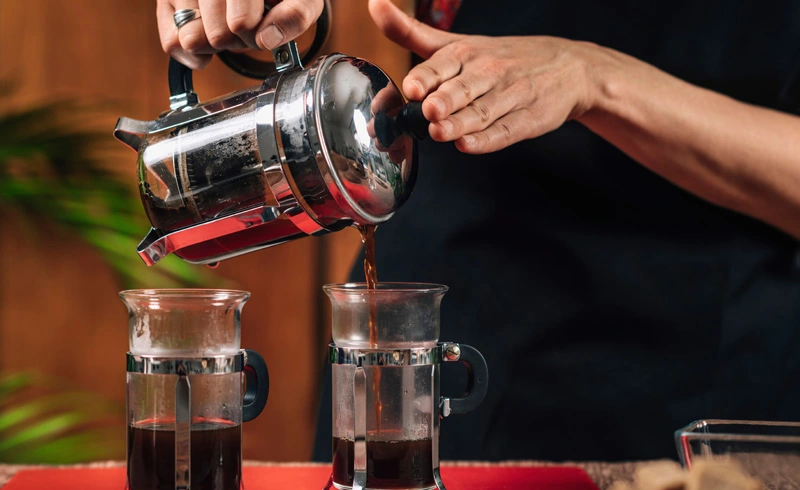
The most familiar immersion brewer in the world. Coarse ground coffee and hot water sit together in a beaker for 4 minutes, then a metal mesh plunger pushes the grounds to the bottom and the brewed coffee is poured. French press produces a heavy bodied, sediment rich cup with strong oils intact (since metal mesh does not filter the way paper does). The technique is forgiving  small variations in dose, water temperature, and brew time still produce a drinkable cup. Best for home daily use, group serving, and any cafe that wants a robust full bodied immersion option on the menu. Good French press immersion brewers are available across the manual brewers range.

AeroPress

Designed by Alan Adler in 2005, the AeroPress combines immersion with a final pressure press step. Grounds and water sit in a chamber for 30 seconds to 2 minutes, then the operator presses a plunger to push the brew through a paper filter into the cup below. The pressure step gives AeroPress a cleaner cup than French press while still benefiting from immersion’s even extraction. Hugely popular among home enthusiasts, travellers, and competition baristas  there is an annual World AeroPress Championship dedicated to recipe innovation. Cup is clean, balanced, and highlights origin notes.

Clever Dripper

The Clever Dripper combines immersion with paper filter drip. A valve at the bottom of the cone holds the water and grounds together during the immersion phase (2 to 4 minutes), then opens when the dripper is placed on a cup, releasing the brewed coffee through the paper filter into the cup. The result is the body and even extraction of immersion combined with the clean cup of paper filtered drip. Clever Dripper is the easiest manual brewer to teach to beginners since the immersion phase is forgiving and the operator does not need to manage water pour technique.

Cold Brew (Immersion Style)

Cold brew is the longest immersion brewing method. Coarse ground coffee and cold or room temperature water sit together for 12 to 18 hours, then are separated through a fine filter. The long immersion at cold temperature extracts soluble compounds without the oils and acidity that hot brewing produces, resulting in a smooth low acidity concentrate that is typically diluted with water or milk before serving. Toddy Cold Brew systems are the standard immersion style cold brew brewers used by cafes worldwide. The Brood Nitro Cold Brew platform extends cold brew into nitrogen infused dispensing.

Cupping (the Professional Reference Method)

Cupping is the standard sensory protocol used by specialty coffee professionals to evaluate coffee. Coarse ground coffee sits in a small bowl with hot water for 4 minutes, then the cupping crust is broken with a spoon and the coffee evaluated at progressively cooler temperatures. Technically a brewing method (immersion based), cupping is rarely used to make daily drinking coffee. Its role is reference: a controlled neutral immersion brew that lets professionals evaluate origin and roast quality independent of brewing variables. If you have taken a serious coffee tasting class, you have done cupping.

How to Make Great Coffee With an Immersion Brewer

Immersion brewing is forgiving but not infinitely forgiving. Five variables shape the cup.

Grind size. Coarse for French press (1000 microns), medium coarse for Clever Dripper, medium fine for AeroPress, very coarse for cold brew. Wrong grind size produces over extracted bitter coffee or under extracted weak coffee.

Brew ratio. 60 to 70 grams of coffee per litre of water for hot immersion methods. 200 to 250 grams per litre for cold brew concentrate. The ratio determines strength.

Water temperature. 90 to 96 degrees Celsius for hot immersion. Room temperature or refrigerated for cold brew. Boiling water (100 degrees) burns the coffee and produces harsh bitterness.

Brew time. 4 minutes for French press and Clever Dripper. 1 to 2 minutes for AeroPress depending on recipe. 12 to 18 hours for cold brew. Longer than the recipe over extracts; shorter under extracts.

Water quality. Coffee is 98 percent water. Hard water and chlorinated water both ruin the cup. Filtered water is essential for any serious immersion brew.

A Brief History of Immersion Brewing Methods

Immersion brewing is the oldest way humans have made coffee. Long before drip filters, espresso pumps, or paper cones, people boiled coffee grounds in water and drank the resulting liquid. Turkish coffee, the brewing tradition across the Middle East and South Asia, is a direct descendant of this earliest immersion method: finely ground coffee, water, and (often) sugar are simmered together in a small pot, the grounds settle to the bottom, and the coffee is poured off the top.

The French press as we know it today emerged in the late 1920s in France and was patented by an Italian designer named Attilio Calimani in 1929. The simple beaker, plunger, and metal mesh filter design has changed remarkably little in nearly a century. The French press became globally popular in the 1960s and 1970s and remains the default home immersion brewer in most kitchens worldwide. Its appeal is the combination of forgiving brewing technique with full bodied results that highlight the coffee’s natural oils.

The AeroPress was invented in 2005 by Alan Adler, an American physicist and inventor better known for the Aerobie flying disc. Adler designed the AeroPress because he wanted a quick way to make a single excellent cup of coffee at home without the bitterness common to drip machines. The unique combination of immersion plus pressure press through a paper filter produces a clean, balanced cup that captures origin character beautifully. Within five years of launch, the AeroPress had its own world championship, and it remains the most innovative immersion brewing format invented in the modern coffee era.

The Clever Dripper was invented in 2009 by Mr. George Liu of Abid in Taiwan as an answer to a specific problem: how to get the body and even extraction of immersion brewing combined with the clean cup of paper filtered drip. The valve design at the bottom of the cone is what makes this hybrid work. Cupping protocol predates all of these by roughly a century, formalised by the Specialty Coffee Association as the standard sensory evaluation method that immersion brewers have always used to evaluate green coffee. Cold brew immersion in its modern form emerged from Japan and the Toddy invention by American Todd Simpson in 1964 made commercial cold brew accessible to cafes worldwide.

Common Mistakes When Brewing Via Immersion

Immersion brewing is forgiving compared to espresso or pour over, but four common mistakes still ruin the cup more often than necessary. Watch for these.

Using boiling water. Water at 100 degrees Celsius scorches coffee grounds and produces harsh bitterness even from good beans. Let the kettle rest 30 to 45 seconds after boiling before pouring; aim for 92 to 96 degrees water temperature. This single change improves immersion brewing more than almost any other technique fix.

Pre ground coffee from the supermarket. Coffee starts losing freshness within hours of grinding. By the time pre ground coffee reaches the supermarket shelf and then your kitchen, the volatile aromatics that make immersion brewing rewarding are gone. Buy whole beans and grind fresh for each brew, even if it adds 90 seconds to the routine. The cup quality difference is dramatic.

Wrong grind size. French press needs coarse grind; AeroPress needs medium fine; cold brew needs very coarse. Using espresso fine grind in a French press makes muddy bitter coffee that no other technique adjustment can save. Match the grind size to the brewing method as the first step of every brew.

Skipping the bloom. For hot immersion methods, pouring just enough water to wet the grounds and waiting 30 seconds before adding the rest of the water (the bloom) lets the coffee release CO2 and improves extraction evenness across the brew. Skip the bloom and the resulting cup tastes flatter, with less aromatic complexity. The 30 second wait is worth the cup quality improvement.

Choosing the Right Immersion Brewer for Your Use

Match the immersion brewer to your context. For daily home use serving 1 to 4 people, a French press or Clever Dripper is the simplest choice for brewing via immersion. For solo home use or travel, AeroPress is unmatched. For cafe service offering an immersion menu option alongside espresso and pour over, a French press at the table or a Clever Dripper at the bar both work. For dedicated cold brew programmes, a Toddy commercial system is the standard. For the broader world of coffee maker supplies and manual brewing equipment, see our full range. Many cafes start with a single immersion brewer for the menu and expand to multiple manual brewing options as the customer base develops a palate for different cup profiles.

Where to Buy Immersion Brewers and Manual Brewing Equipment in India

Kaapi Machines stocks the full range of manual brewing equipment for immersion methods and the broader brewing category. French press, AeroPress, Clever Dripper, Toddy cold brew systems, and supporting barista tools including grinders, scales, and brewing kettles. Pair the immersion brewer with the right coffee grinder  coarse grind capability matters for French press and cold brew. Barista training covers immersion brewing alongside espresso for cafes building a complete menu.