


























Blogs
Coffee Roasting Course in India: What You Do Before, During, and After Every Roast
Most people think of roasting as the moment of transformation. The green bean goes in, the roasted bean comes out, and the mystery happens in between. Professional roasters think about it differently. The roast itself is the middle act of a three-part process, and what happens before and after the drum is just as determinative of the final cup as the profile developed inside it. A coffee roasting course that only covers the time between charge and drop is teaching the most dramatic part of the story while skipping the chapters that make it make sense.
Kaapi Machines coffee roasting courses are structured around this three-part reality. Before the roast: green coffee assessment, lot selection, and charge temperature decisions. During the roast: profile execution, real time adjustment, and the sensory and data reading that guides every decision from the turning point to the drop. After the roast: colour analysis, rest period management, and the cupping session that closes the feedback loop and informs the next batch. The SCA Roasting Skills pathway, which Kaapi Machines delivers across Foundation, Intermediate, and Professional levels, is built on the same three-part logic.
Whether you are a barista searching for a coffee bean roasting course to understand the upstream of your craft, a cafe owner considering in house roasting, an aspiring roaster looking for the most credible entry into a professional roasting career, or a serious home roaster who wants to move from following presets to building your own profiles, this page maps the complete Kaapi Machines coffee roasting training offering. It covers what each phase of the roast involves, what each certification level develops, what the training costs, and why the SCA Roasting Skills credential is the most widely recognised qualification available in the field.
Quick Facts | Coffee Roasting Course at Kaapi Machines |
Course Levels | Foundation | Intermediate | Professional (SCA Roasting Skills pathway) |
Duration | 1 to 3 days per level; Roasting Masterclass runs 3 days |
Equipment Used | Commercial drum roasters with roast logging software |
Certification | Kaapi Machines Certificate; SCA Roasting Skills credential available |
Locations | Bangalore, Mumbai, Delhi, Hyderabad |
Prerequisites | None for Foundation level; coffee knowledge is helpful but not required |
Contact | + 91 97314 41341 | info@kaapimachines.com |
What Is a Coffee Roasting Course and Who Is It For
A coffee roasting course is a structured training programme covering the knowledge and practical skills required to take green coffee through the roasting process and produce a consistent, high quality roasted product. Unlike barista training, which focuses on the preparation of coffee after roasting, a coffee roasting course addresses the transformation that determines what is in the bag before anyone pulls a shot or sets up a brew. The decisions a roaster makes in a twelve minute batch window determine approximately 70 to 80 percent of the flavour characteristics that a barista then works with. Understanding roasting is not optional for anyone who wants a complete picture of coffee.
The range of people who benefit from a coffee roasting course is broader than most assume. Baristas at specialty cafes increasingly find that knowledge of roasting transforms their ability to communicate about the coffee they are serving, to diagnose extraction problems that originate upstream of the grinder, and to develop genuine product authority that distinguishes them from colleagues who understand coffee only from the extraction end. Cafe owners who source from a single roaster find that roasting knowledge gives them the vocabulary to have specific, technical conversations about profile adjustments, freshness windows, and the relationship between roast level and their particular extraction setup.
For those entering the roasting profession, the SCA Roasting Skills pathway delivered through Kaapi Machines provides the most internationally recognised credential available in the field. Completing SCA Roasting Skills Foundation, Intermediate, and Professional levels, alongside other SCA modules, contributes toward the SCA Coffee Diploma: the highest individual credential structure in specialty coffee. And for serious home roasters who have been experimenting with sample roasters or modified drum roasters at home, a coffee roastery course at Kaapi Machines provides the professional framework that converts experimental results into repeatable ones.
Before the Roast: Green Coffee Assessment and Lot Preparation
The decisions made before a green coffee lot enters the drum determine the upper limit of what the roast can produce. A poorly assessed lot, roasted on a technically well-executed profile, produces a cup that falls short of what the coffee was capable of. A thoroughly assessed lot, roasted with parameters that match its physical characteristics, produces a cup that reflects the full potential of the origin. Green coffee assessment is not preparatory housekeeping before the real work begins. It is the first and arguably most important skill a coffee bean roasting course teaches.
Every coffee roasting training programme at Kaapi Machines begins with a green coffee assessment module. Participants learn to evaluate moisture content using a moisture metre, assess bean density through water displacement, sort for defect types and count them against the SCA green coffee grading scale, and evaluate screen size uniformity before any roasting decisions are made. They also learn how the processing method used on a lot, whether washed, natural, honey, or anaerobic, predicts the lot’s behaviour in the drum and its likely flavour profile if the roast is well executed.
What You Assess | Why It Matters | What Happens Without This Step |
Moisture content (10 to 12.5%) | Controls how much heat the bean needs before chemistry begins | Over application of heat to a low moisture lot scorches the surface before the interior develops |
Bean density | Dense beans need more energy and resist rapid development | Rushing a high density lot creates an underdeveloped interior with a roasted exterior |
Screen size and uniformity | Uneven sized beans extract heat at different rates | Mixed lot produces inconsistent roast degree across the entire batch |
Defect count and type | Defective beans roast unpredictably and introduce off flavours | A high defect lot produces cups with earthy, fermented, or hollow characteristics regardless of profile |
Processing method | Washed coffees carry less residual sugar than naturals, affecting caramelisation | Applying a natural profile to a washed lot over develops sweetness; the reverse under develops it |
The practical component of the pre-roast module involves participants assessing multiple green coffee samples from different origins and processing methods and documenting their findings in a format that informs roasting parameters. Participants leave this module understanding why two bags of coffee that look similar on a roastery shelf may require entirely different charge temperatures, rate of rise targets, and development time ratios to produce their best cup.
During the Roast: Profile Execution and Real Time Decision Making
The roaster’s job during a batch is simultaneously analytical and sensory. Temperature data from roast logging software plots the bean probe and environmental probe curves in real time, showing the rate of rise, the turning point, and the approach to first crack. The roaster reads this data continuously. But they also smell the bean at every stage, listen for the crack, and use accumulated sensory memory to cross-reference what the data is showing with what the coffee is communicating through aroma and sound. A coffee roasting course builds both skills in parallel, because neither is sufficient without the other.
Kaapi Machines coffee roasting training sessions use commercial drum roasters with roast logging software running throughout every batch. Participants begin by executing pre-designed profiles under trainer supervision, learning to read the data curves and identify what each deviation means before they are asked to make in-roast corrections. As the programme progresses, they develop profiles for specific green coffee lots from the assessment data they collected, execute those profiles, and cup the results to evaluate whether the profile achieved its intended outcome.
The most critical decision during a roast is the development time: the period between first crack and the drop of the batch into the cooling tray. Development time ratio, the proportion of total roast time spent in this post-crack phase, is the variable that most determines the balance between acidity and sweetness in the final cup. Too little development produces a grassy, under-developed result. Too much produces a flat, baked character. Hitting the right development window for a specific origin and intended brew method is the core craft skill of commercial roasting, and it is what every level of a Kaapi Machines coffee roasting workshop focuses on developing with increasing precision.
After the Roast: Colour Analysis, Rest Periods, and Closing the Feedback Loop
The moment a batch drops into the cooling tray, the roaster’s post-roast work begins. The first task is colour measurement: using an Agtron instrument or equivalent colour measurement tool to record the roast degree against a standardised scale. The Agtron scale runs from lighter (higher numbers) to darker (lower numbers), and the target range for a given coffee and roast style is set before the batch based on the roaster’s profile documentation. Colour measurement provides an objective record that, alongside the logged roast curve, makes the batch reproducible and comparable across sessions.
Rest periods are the second post-roast consideration that most home and amateur roasters underestimate. Freshly roasted coffee contains significant dissolved CO2 from the roasting process, and this gas interferes with extraction if brewing begins too soon after the roast. Roasted espresso typically requires three to ten days of rest before peak extraction performance. Filter coffee benefits from two to five days. Understanding rest periods, how they interact with roast level and origin, and how to manage them in a production schedule is a standard component of Kaapi Machines coffee roasting training at Intermediate level and above.
The final and most important post-roast activity is cupping the batch and evaluating the result against the intended profile. A roaster who can trace a specific cup characteristic back to a specific decision in the roast profile has closed the feedback loop that makes improvement compounding rather than random. Did the grassy note in the cup result from insufficient development time, or from a lot with too high moisture content that needed a longer drying phase? Did the flatness in the aftertaste come from a baked profile caused by stalling the rate of rise, or from a naturally low-acidity robusta blend that the profile could not have changed? These questions are answered by cupping with analytical intent, using the same SCA cupping protocol that all Kaapi Machines sensory training employs.
→ View upcoming coffee roasting course batch dates: kaapimachines.com/barista-training | +91 97314 41341
The SCA Roasting Skills Certification Pathway
The SCA Roasting Skills module is one of five disciplines within the SCA Coffee Diploma pathway. It is available at Foundation, Intermediate, and Professional levels, with each level building on the previous through increasingly demanding practical and theoretical assessment. Kaapi Machines is an authorised SCA training provider that prepares candidates for all three Roasting Skills levels.
SCA Roasting Skills Foundation
The Foundation level is the entry point for candidates with no prior formal roasting training. It covers the fundamentals of roasting science including the five key roasting phases, green coffee assessment basics, roast profile reading, colour analysis using the Agtron scale, and sensory evaluation of roasted coffee through cupping. Candidates complete both a written theoretical assessment and a practical roasting examination conducted by an authorised SCA examiner. Foundation level earns 5 SCA Credit Points toward the Coffee Diploma and is the appropriate starting point for baristas, cafe owners, and anyone entering roasting study without prior formal background.
The time commitment for Foundation level is one to two days of instruction plus the SCA examination, which can be scheduled at our training centres in Bangalore, Mumbai, Delhi, or Hyderabad. No prior roasting experience is required. Kaapi Machines provides all green coffee samples, roasting equipment, and cupping supplies for the Foundation programme.
SCA Roasting Skills Intermediate
The Intermediate level builds advanced profile development skills, introduces production roasting workflow including batch scheduling and cooling cycle management, covers blending principles and how to roast individual blend components to complement rather than compete with each other, and requires candidates to develop and document their own roast profiles from green coffee assessment data. The practical examination assesses the candidate’s ability to execute a specific profile, produce consistent results across multiple batches, and evaluate the results through formal cupping. Intermediate level earns 10 SCA Credit Points toward the Coffee Diploma.
Kaapi Machines Intermediate coffee roasting training is the most commonly booked format among baristas making a career transition toward roasting roles, and among cafe owners who have already established a green coffee sourcing relationship and are ready to move toward in house roasting. The programme runs over two days and requires successful completion of Foundation level or demonstrated equivalent experience.
SCA Roasting Skills Professional
Professional level is the highest SCA designation in roasting and requires mastery across the full roasting skill set: advanced profile development and documentation, production management systems, quality control protocol, and advanced sensory evaluation including formal defect identification and correction. The Professional examination is among the most demanding in the SCA pathway, assessing candidates on their ability to produce consistent, high quality results across multiple origins and roast styles under examination conditions. Professional level earns 25 SCA Credit Points toward the Coffee Diploma, making it the single highest-value module available in the roasting discipline.
What a Coffee Roasting Course at Kaapi Machines Covers
Regardless of the level or format enrolled in, every coffee roasting programme at Kaapi Machines is structured around the principle that roasting cannot be learned by watching. Participants roast. They generate data. They cup the results. They adjust. They roast again. The curriculum provides the framework that makes this cycle of practice and feedback productive from the first session.
- Green coffee assessment: Moisture content measurement, density evaluation, defect sorting against the SCA green coffee grading scale, screen size analysis, and how processing method predicts roasting behaviour and flavour potential.
- Roast profiling and data analysis: Reading temperature curves in real time, understanding rate of rise as the primary developmental variable, managing the relationship between bean probe and environmental probe readings, and using roast logging software to track, compare, and reproduce profiles across sessions.
- Colour analysis and roast degree measurement: Using Agtron measurement alongside visual assessment to establish objective roast degree targets, document batch results, and evaluate consistency across production sessions.
- Sensory evaluation of roasted coffee: SCA cupping protocol applied specifically to roast evaluation. Identifying roast defects by taste including tipping, baking, scorching, and under-development. Connecting profile decisions to specific cup outcomes with sufficient precision to make targeted adjustments.
- Equipment calibration and maintenance: Drum temperature probe calibration, airflow management and its effect on roast development, chaff collection and fire prevention protocol, and the maintenance schedules that keep commercial roasters performing consistently across high production volumes.
- Blending principles: How roast degree and origin selection interact in blends, how to roast individual blend components to complement rather than overpower each other, and how to document blends for reproducibility.
- Production workflow: Batch scheduling, cooling cycle management, rest period guidelines by roast level and processing method, and the logistics of producing consistent roasted coffee at scales from sample batching through commercial production.
Who Should Attend a Coffee Roasting Course
Baristas extending their professional knowledge: The most common group at Kaapi Machines coffee roasting courses. A barista who understands roasting reads a coffee menu differently, dials in more efficiently, and can communicate about origin and process with a depth that distinguishes them professionally. A Foundation level coffee bean roasting course is sufficient to produce a transformative change in how a barista thinks about and works with the coffees in their grinder.
Cafe owners planning to roast in house: In house roasting is a significant business and operational decision that requires both technical roasting skill and clear understanding of the production workflow, green sourcing, and quality control systems required to make it commercially viable. Our Intermediate and Professional level coffee roasting training courses are designed to provide the full picture of what in house roasting involves, not just the excitement of the first batch.
Aspiring roasters entering the profession: The SCA Roasting Skills pathway is the most credible formal entry route into a professional roasting career. Candidates who hold the SCA Roasting Skills Professional credential alongside other SCA modules are demonstrably better positioned for head roaster and quality control roles at roasteries and specialty cafe chains than those with informal experience alone.
Coffee quality professionals and buyers: Buyers and importers who understand roasting can have more productive supplier conversations, evaluate roasted samples with greater precision, and recognise how roasting decisions are interacting with origin characteristics to produce the cups they are assessing.
Coffee enthusiasts and serious home roasters: A Foundation level coffee roasting course or the Kaapi Machines Roasting Masterclass is equally relevant for people who roast at home and want to move beyond preset profiles toward building their own. The combination of green coffee assessment knowledge, profile development skills, and post-roast cupping protocol transforms home roasting from experimentation to craft.
The Kaapi Machines Coffee Roasting Academy
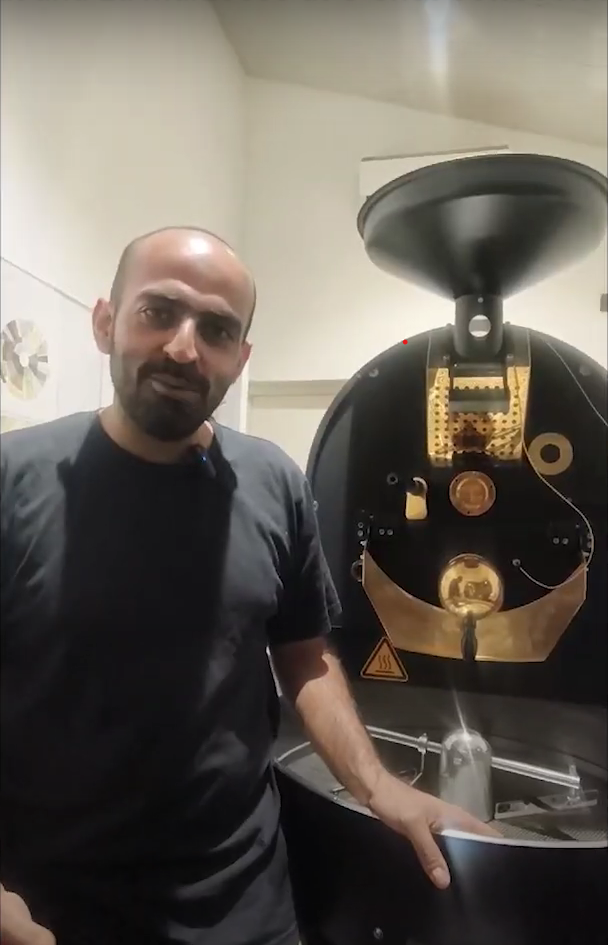
Kaapi Machines coffee roasting courses are delivered by our SCA Roasting Skills certified trainer, who brings direct commercial roastery experience across South India’s specialty coffee sector including roasting for some of the region’s most respected specialty cafe brands. All roasting training uses commercial drum roasters with roast logging software running throughout every session. Sample roasters are used for green coffee assessment exercises but the primary curriculum is conducted on the machines that matter in a commercial context.
Every participant in a Kaapi Machines coffee roasting programme works with roast logging software from their first session, developing the analytical discipline that connects data to sensory outcomes. The roaster who can read a profile curve and predict what the cup will taste like before it is cupped is operating at a professional level. The roaster who can taste a cup and identify the specific moment in the profile where an adjustment would improve it is operating at a master level. Kaapi Machines coffee roasting academy programmes build toward both.
For cafe owners and roastery managers who want to train an entire team, our corporate coffee roasting training format can be delivered at our training centres or on site at your roasting facility. On site training uses your specific equipment and covers the profile documentation and quality control systems that make a roastery team consistent rather than dependent on the judgment of a single experienced roaster.
Online Coffee Roasting Courses: What Is Available and What Is Not
The demand for online coffee roasting courses is genuine and growing. Roasting theory is among the most intellectually engaging content in coffee education, and well-produced online resources on roasting chemistry, green coffee assessment, and profile analysis from organisations like the SCA and specialist roasting software companies like Cropster and Artisan do exist and are worthwhile. Free and paid online content covers roasting theory, green coffee assessment protocol, and profile reading at a foundational level. These are legitimate starting points for anyone beginning their learn coffee roasting journey.
What online content cannot provide is the physical experience of managing a commercial drum roaster under real batch conditions. The decisions made during a roast happen in seconds, in response to a combination of data, sound, smell, and the accumulated sensory experience of having made the same decision before. Knowing the theory of rate of rise management does not produce the instinct to recognise when the rate is dropping too steeply approaching first crack and make an airflow adjustment before the profile stalls. That instinct is only developed through supervised roaster time with immediate feedback. All Kaapi Machines coffee roasting training programmes require in person attendance for the practical components, and include online theory module access as preparation at no additional cost.
Is a Coffee Roasting Certification Worth the Investment
Coffee roasting certification through the SCA Roasting Skills pathway is among the most career-defining credentials available in specialty coffee, specifically because it is the only one in roasting that is independently verified. An SCA Roasting Skills Professional credential tells a potential employer that the holder was assessed by an independent examiner against a global standard and passed. It cannot be purchased with attendance alone. This independence is the same quality that makes SCA credentials in other disciplines valuable: they mean something because they require something.
For cafe owners who are not necessarily building a roasting career, the return on a coffee bean roasting course is different but equally concrete. The ability to have a specific, technically grounded conversation with a roasting supplier about profile adjustments, the ability to evaluate a batch of sample roasts before purchasing a season’s supply of green coffee, and the ability to identify when the coffee being delivered has been roasted inconsistently: these are business skills with direct financial implications. The cost of a Foundation or Intermediate coffee roasting course is recovered many times over in better purchasing decisions and better green coffee negotiations.
Coffee Roasting Course Fees
Coffee roasting course fees at Kaapi Machines reflect the commercial equipment time, the curriculum depth, and the certification pathway included. SCA exam fees are set by the Specialty Coffee Association and paid directly to the association as a separate transaction. The fees shown below cover training, materials, cupping supplies, and the Kaapi Machines certificate of completion.
Coffee Roasting Course | Approx. Fee | Certification |
Foundation (1 to 2 days) | Rs 10,000 to Rs 18,000 | Kaapi Machines Certificate |
Intermediate (2 days) | Rs 18,000 to Rs 28,000 | Kaapi Machines Certificate |
Professional (2 to 3 days) | Rs 28,000 to Rs 40,000 | Kaapi Machines Certificate |
Roasting Masterclass (3 days) | Contact for pricing | Kaapi Machines Certificate |
SCA Roasting Skills Exam (optional) | Set by SCA | SCA Roasting Skills Certificate |
Corporate and Group Training | Contact for group rates | Kaapi Machines Certificate |
Roaster’s Vocabulary: Terms Every Coffee Roasting Course Introduces
- Rate of Rise (RoR): The speed at which bean temperature is increasing at any given moment in the roast, measured in degrees per minute. Falling RoR throughout the roast is the standard target; a flat or rising RoR approaching first crack typically signals a problem.
- Development Time Ratio (DTR): The proportion of total roast time spent after first crack. Typically 20 to 25 percent for most specialty profiles. Higher DTR builds body and sweetness; lower DTR preserves brightness and floral notes.
- Charge temperature: The drum temperature at which green coffee is loaded. Too high causes tipping; too low extends the drying phase and risks a flat, baked flavour profile.
- Turning point: The moment at which bean temperature stops falling after charge and begins to rise. Typically 60 to 90 seconds in. The turning point temperature indicates how aggressively the drum absorbed the charge.
- Tipping: Surface scorching caused by excessive charge temperature or insufficient drum movement. Produces papery, astringent character in the cup.
- Baking: Over exposure to moderate heat without adequate development, producing a flat, lifeless cup. Caused by stalling the rate of rise during the Maillard phase.
- First crack: The audible fracturing of bean cell walls at approximately 196 to 205 degrees Celsius as steam and CO2 build up and release. The beginning of development phase. Marks the point at which light roast drops are made.
- Second crack: A second fracturing at approximately 225 degrees Celsius as cell walls break down further and oils begin migrating to the bean surface. Dark roast territory. High risk of scorching without precise control.
- Agtron reading: A colour measurement of roasted coffee on a standardised numerical scale. Higher numbers indicate lighter roasts. Used to objectively record and replicate roast degree across sessions and operators.
- Chaff: The dried silver skin of the coffee cherry that separates from the bean during roasting. Chaff collection and management is a fire safety and flavour quality consideration in commercial roasting operations.
Frequently Asked Questions About Coffee Roasting Courses in India
Do I need any prior experience to attend a coffee roasting course?
No prior roasting experience is required for Foundation level coffee roasting training. Some familiarity with coffee as a product is helpful but not mandatory. Our certified trainer assesses each participant’s starting point in the first session and structures the practical exercises to match. If you have been following coffee roasting online and want to start at the Intermediate level, discuss your background with our team before enrolling and we will identify the right entry point.
What is the difference between an SCA roasting course and a Kaapi Machines certificate programme?
The SCA Roasting Skills credential is issued by the Specialty Coffee Association after passing an independent practical and theoretical examination. It is verified in the SCA global database and recognised by specialty coffee employers internationally. The Kaapi Machines certificate is issued upon completion of our in house roasting programmes and is recognised across India’s specialty cafe and hospitality sector. Both require demonstrated performance rather than attendance alone. Most participants pursue the Kaapi Machines certificate first and add the SCA examination as a subsequent step.
How long does a coffee roasting course take?
Foundation level coffee roasting training runs one to two days. Intermediate runs two days. The Professional level and the Roasting Masterclass run three days each. The full SCA Roasting Skills pathway from Foundation to Professional typically spans several weeks to months depending on batch availability and your scheduling. Online theory modules are available as preparation to make each in person session more productive.
Is coffee roasting training available in cities outside Bangalore?
Kaapi Machines runs coffee roasting courses in Bangalore, Mumbai, Delhi, and Hyderabad. Corporate and group coffee roasting training is also available on site at roasteries and cafe operations across India with a minimum group size of three participants. For individuals outside our regular batch cities, the Bangalore Indiranagar centre offers the most frequent batch schedule and is typically the most accessible option.
What equipment is used during coffee roasting training?
All Kaapi Machines coffee roasting courses use commercial drum roasters producing the batch dynamics and volume ranges participants will encounter in a professional roasting environment. Roast logging software records every session for subsequent analysis. Sample roasters are used for green coffee assessment exercises. Colour measurement tools including Agtron-equivalent instruments are available throughout the programme for post-roast degree assessment.
Can I complete a coffee roasting course online?
Roasting theory content covering roasting chemistry, green coffee assessment methodology, and profile analysis is available online and forms part of our pre-course preparation materials, accessible at no additional cost to enrolled participants. The practical roasting components, which constitute the majority of every level’s assessment, require in person attendance at a Kaapi Machines training centre. There is no substitute for supervised commercial roaster time in developing the skill set that coffee roasting certification requires.
What career opportunities does a coffee roasting certification open?
The most common career paths for Kaapi Machines coffee roasting graduates are roaster roles at specialty roasteries, head roaster positions at in house roasting cafes, quality control and green sourcing roles at coffee importers, and coffee trainer positions where roasting knowledge is a required component of a broader curriculum. The SCA Roasting Skills Professional credential combined with SCA Sensory Skills is also the primary academic preparation pathway toward Q Grader certification through the Coffee Quality Institute.
How much does a coffee roasting course cost in India?
Foundation level coffee roasting training at Kaapi Machines is approximately Rs 10,000 to Rs 18,000. Intermediate coffee roasting training runs Rs 18,000 to Rs 28,000. The Professional level programme runs Rs 28,000 to Rs 40,000. SCA exam fees are set by the Specialty Coffee Association and paid directly to the association. Corporate and group programmes are priced based on scope and group size. All fees include training, materials, cupping supplies, and the Kaapi Machines certificate of completion.
Start Your Coffee Roasting Training at Kaapi Machines
Coffee roasting is where every coffee career eventually wants to go. It is the craft that determines 80 percent of what ends up in the cup, the discipline that requires the broadest combination of analytical skill and sensory acuity in the entire coffee profession, and the area where structured training from a certified instructor on commercial equipment produces the most immediate and lasting improvement. The gap between a roaster who produces great coffee occasionally and one who produces it consistently is exactly the content of a Kaapi Machines coffee roasting course.
Our coffee roasting programmes are delivered by an SCA Roasting Skills certified trainer with direct commercial roastery experience, on commercial drum roasters with roast logging software, at training centres in Bangalore, Mumbai, Delhi, and Hyderabad. Every programme from Foundation to Professional is designed with a single output in mind: a roaster who understands what they are doing and can do it consistently.
Contact Kaapi Machines today to confirm coffee roasting course batch dates and take the first step toward roasting with intention.
Phone: +91 97314 41341
Email: info@kaapimachines.com
Roasting Course Locations: Bangalore (Indiranagar), Mumbai, Delhi, Hyderabad