
Coffee Machine Price in India: A Commercial Buyer’s Guide
If you’re running or planning a cafe, hotel, restaurant, office pantry, or QSR chain, the first question you’ll ask is the coffee machine price in India for your setup. This guide gives honest answers.This guide gives honest price ranges for commercial coffee equipment in India, explains what drives the differences, and helps you match the right machine to your volume and budget. It’s based on current market prices from Kaapi Machines and our 20+ years supplying the commercial coffee sector.
This is not a guide for home coffee setups Our focus here is commercial equipment from ₹1.5 lakh upwards, the kind that runs hundreds of cups a day and earns its keep.
What Is the Current State of the Indian Coffee Machine Market?
India’s commercial coffee market has grown significantly over the past decade, driven by the specialty cafe boom, rising QSR coffee programmes, increased hotel coffee standards, and corporate investment in better office pantries. According to industry research published by IMARC Group and MarketsandMarkets, the overall Indian coffee machine market was valued at roughly USD 190 to 220 million in FY2024 and is projected to grow at a compound annual rate of 8 to 9 percent through the early 2030s.
For commercial buyers, the practical takeaway is that more brands, more price points, and more local service infrastructure are available today than ever before. A decade ago, buying a La Marzocco in Tier-2 India meant waiting weeks for parts. Today, machines from La Marzocco, Rancilio, Carimali, La Cimbali, WMF, Budan and others are serviced through authorised local networks.
Coffee Machine Prices in India: Category Overview
Commercial coffee machines in India fall into six practical categories. Here’s what each costs, what it suits, and the buyers we typically recommend them for.
Category | Typical Price Range | Best For |
Office Automatic / Vending | ₹1.5 to 6 lakh | Offices, hospitals, hotels, QSR |
Semi-Automatic Espresso Machine | ₹80,000 to 18+ lakh | Cafes, specialty bars, restaurants |
Super-Automatic Commercial | ₹4 to 15+ lakh | Hotels, large offices, high-volume sites |
Specialty Espresso (Top-Tier) | ₹8 to 30+ lakh | Specialty cafes, flagship bars |
Batch Brewer / Filter | ₹2 to 4 lakh | Hotels, catering, buffet service |
Commercial Coffee Grinder | ₹60,000 to 3+ lakh | Pair with any espresso machine |
These ranges are current as of early 2026 and reflect GST-inclusive retail pricing from authorised dealers. Grey-market imports run 15 to 25 percent lower but come without warranty, genuine parts, or factory-trained service. For commercial equipment, that saving rarely ends well.
Detailed Price Breakdown by Machine Type
1. Office Automatic and Vending Machines
Bean-to-cup automatic machines designed for unattended operation in offices, hotels, and similar environments. Button-operated, minimal training required, ideal for 50 to 500 cups per day.
- Budan M200 / M300 series: ₹2 to 3.5 lakh. Popular mid-range choice for mid-size offices, hospitals, and smaller hotels.
- WMF 1100S / 1300S Classic: ₹5 to 8+ lakh. Swiss-German engineering, reliable for offices of 80 to 150 people.
- WMF 5000: ₹14 to 18+ lakh. Super-automatic with higher throughput for hotels and large offices.
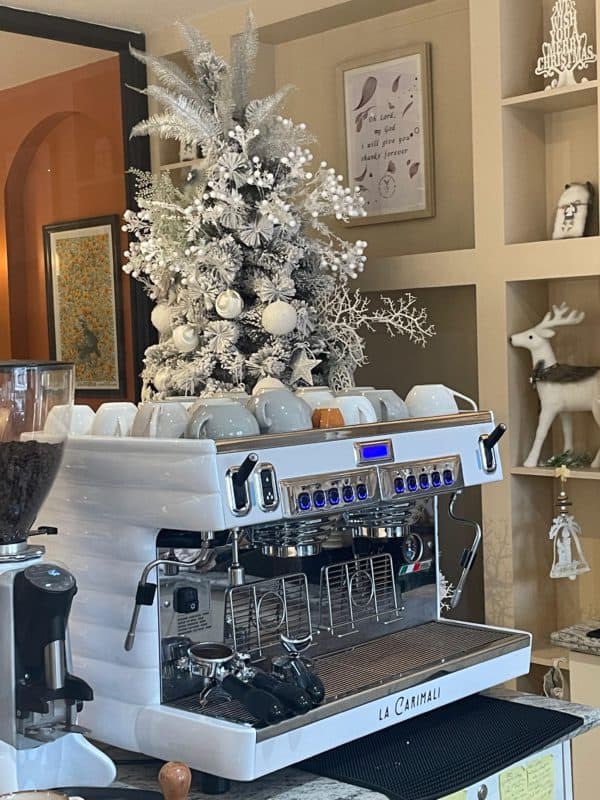
- Carimali Armonia : ₹6.5 to 9 lakh. Italian styling with genuinely good in-cup quality.
2. Semi-Automatic Espresso Machines for Cafes
Traditional barista-operated machines where the operator controls grind, dose, and extraction. These are the standard in specialty cafes and serious coffee bars.
- Budan Maestro (1 group): ₹1.5 to 2 lakh. Entry-level automatic, good for small offices of 30 to 80 people.
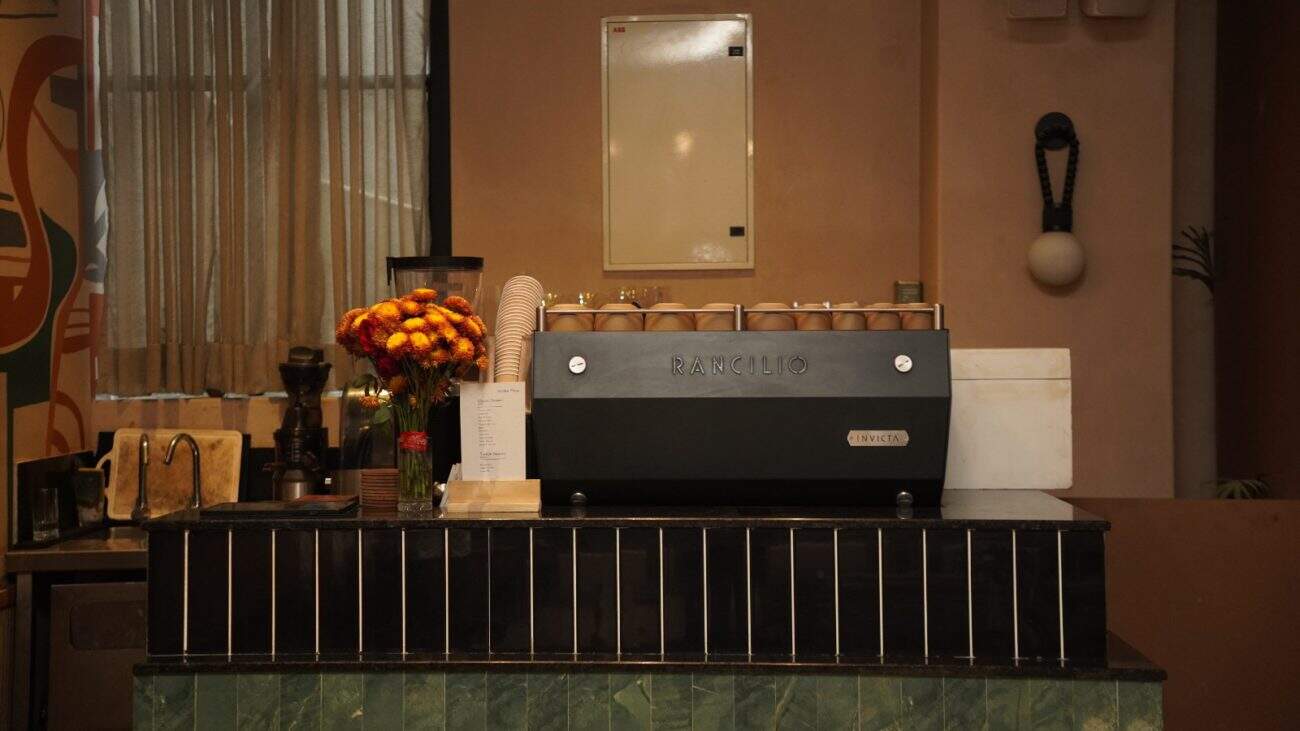
- Rancilio Specialty RS 1: ₹8.5 to 10+ lakh. Compact, reliable, ideal for small specialty bars and kiosks.
- Rancilio Classe 5 USB (2-group): ₹3.5 to 6 lakh. Workhorse for mid-volume cafes, forgiving for teams still building consistency.
- Rancilio Classe 7 (2-group): ₹5 to 9 lakh. A proven mid-tier commercial machine for cafes doing 200 to 400 cups per day.
- Carimali Glow: ₹3 to 4 lakh. Good entry into proper commercial equipment for new cafe openings.
- La Marzocco Linea PB (2-group): ₹10 to 14+ lakh. Industry-standard specialty cafe machine, excellent thermal stability.
- La Marzocco Strada / Leva X: ₹16 to 25+ lakh. Flagship machines for premier specialty cafes.
3. Super-Automatic Commercial Machines
Fully automatic machines that grind, tamp, extract, and froth milk at the push of a button. Popular in hotels, corporate cafeterias, and QSR chains where consistency matters more than barista craft.
- WMF Espresso Next: ₹16 to 22+ lakh.
- Carimali Mya Ultra: ₹5 to 6+ lakh.
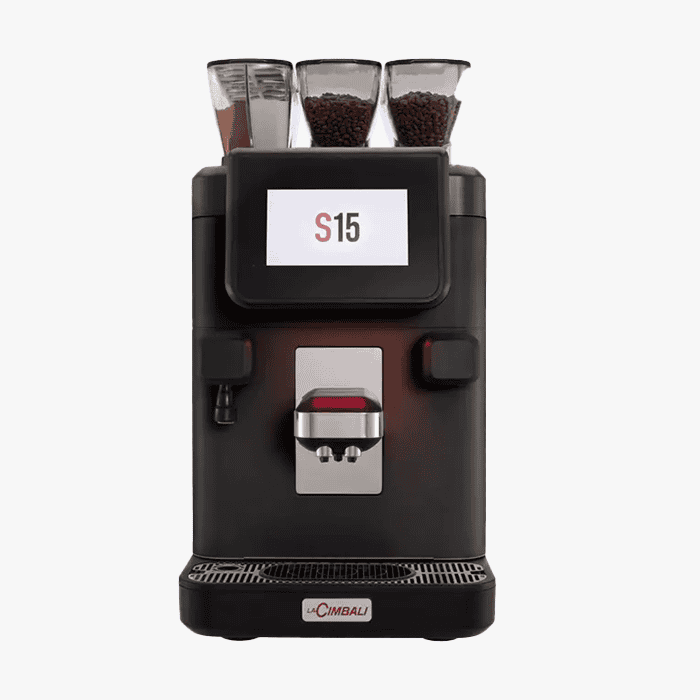
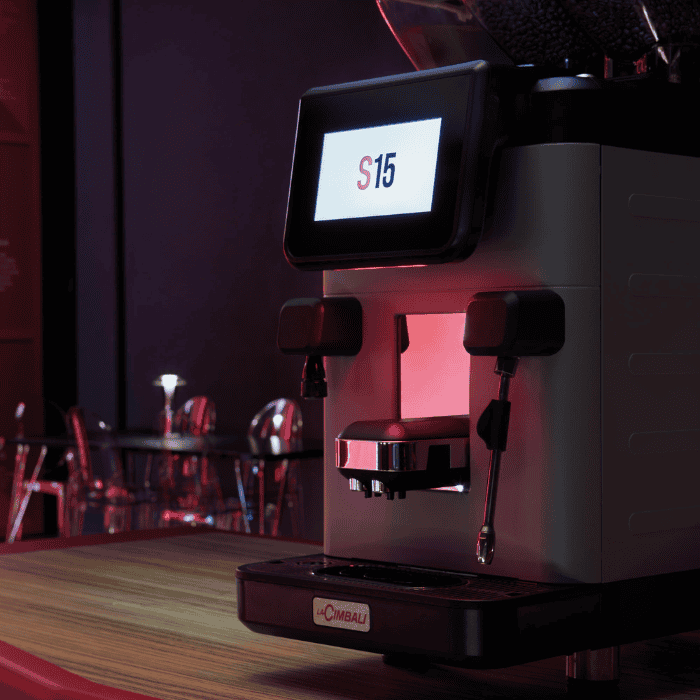
- La Cimbali S15: ₹9 to 10+ lakh. Touchscreen super-automatic for mid-size cafes and hotels.
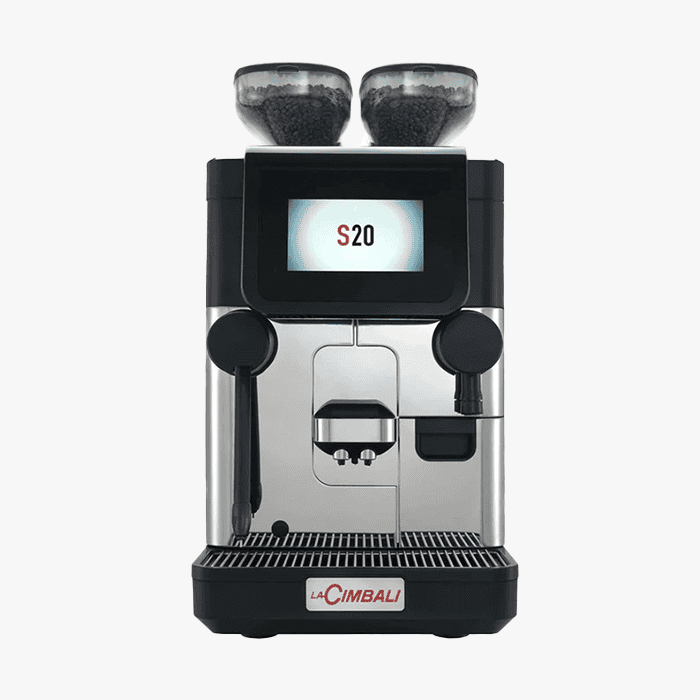
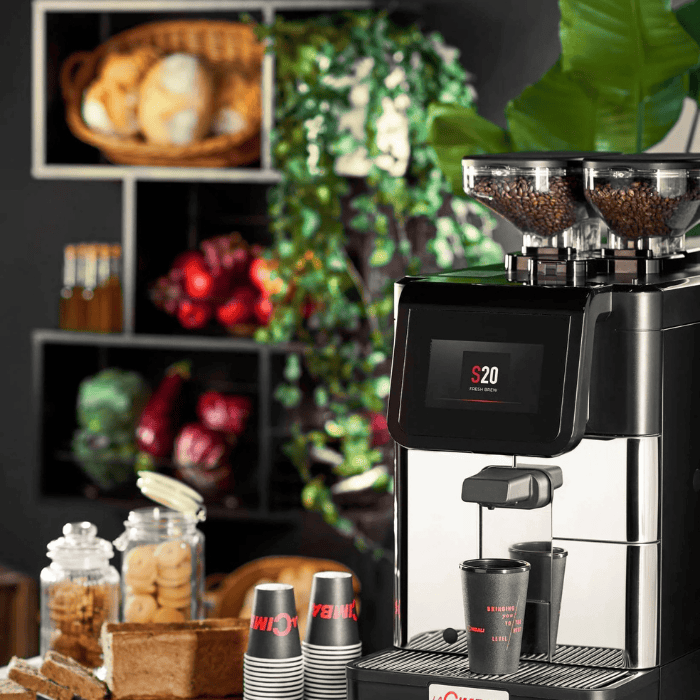
- La Cimbali S20: ₹14 to 22+ lakh. Higher throughput super-automatic for larger operations.
4. Batch Brewers and Filter Machines
For filter coffee, buffet service, and catering where consistency across large batches matters more than espresso craft.
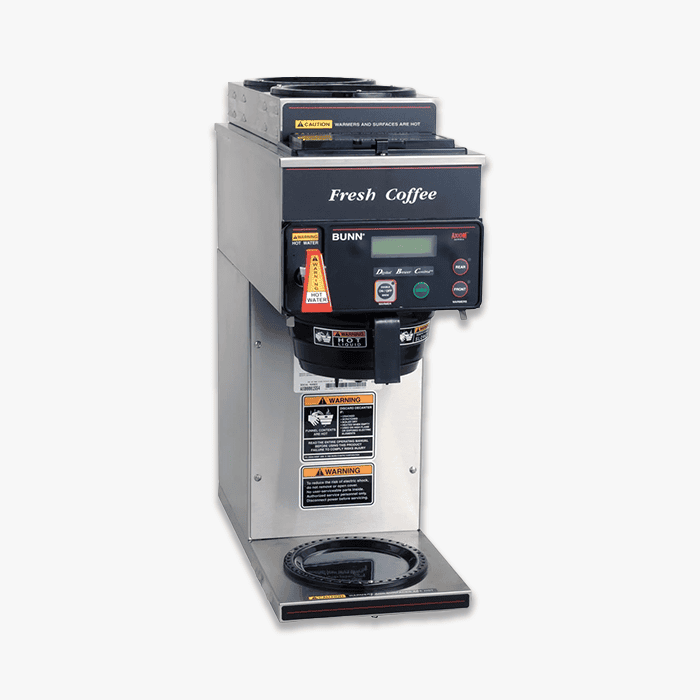
- Bunn Axiom Airpot Coffee Brewer: ₹2.5 to 6+ lakh. 39.8 litres per hour, ideal for hotels and large events.
5. Commercial Coffee Grinders
Essential for any serious coffee operation. The grinder matters as much as the espresso machine; we see new cafe owners under-spec grinders routinely.
- Anfim Pratica: ₹2 to 2.5+ lakh. Solid entry-level espresso grinder.
- Mahlkönig E65S: ₹2.5 to 3+ lakh. Proven workhorse in Indian specialty cafes.
- Mahlkönig E80 GBW: ₹3.7 to 4.5+ lakh. Premium grind-by-weight grinder for top-tier cafes.
- Ditting 807: ₹5 to 7+ lakh. Popular for filter coffee batch grinding.
What Factors Affect Commercial Coffee Machine Prices?
Six factors drive most of the price variation in commercial coffee equipment.
1. Boiler Design and Thermal Stability
Single boiler machines (cheaper) compromise between brewing and steaming temperatures. Dual boiler and saturated group-head machines (premium) maintain both independently, producing dramatically better shots. A dual boiler machine typically costs 40 to 80 percent more than a comparable single boiler.
2. Automation Level
A fully automatic machine with integrated grinder and milk frother costs 30 to 50 percent more than a semi-automatic of similar capacity, but it also removes the need for a trained barista. For office and hotel use, this often pays back quickly in labour costs. For cafes where quality and craft matter, semi-automatic is still the better choice.
3. Build Quality and Materials
Commercial-grade stainless steel bodies, brass boilers, and proper pump systems add 15 to 30 percent to price but dramatically extend lifespan. A well-built commercial espresso machine should last 8 to 12 years of daily commercial use. A poorly built one will need replacement in 3 to 5.
4. Brand and Country of Origin
Italian-made machines (La Marzocco, Rancilio, Carimali, La Cimbali) typically carry a 15 to 25 percent premium over Chinese and Korean alternatives (Kalerm, Expobar) of similar capability. You’re paying for manufacturing heritage, parts availability, and resale value.
5. Cup Capacity and Volume
A 1-group machine handling 100 cups per day costs a third of a 3-group machine handling 400+ cups per day. Size the machine to your actual volume, not your ambition. Overbuying is wasted capital; underbuying kills service speed at peak hours.
6. Import Duties, GST, and Service Contracts
GST at 18 percent and import duty of 10 to 20 percent on machines not assembled in India add meaningfully to the sticker price. Annual maintenance contracts add ₹15,000 to ₹60,000 per year depending on the machine. Factor these into your total cost of ownership, not just the upfront number.


How Do You Choose the Right Machine for Your Business?
Match the machine to the business, not the other way around. Here’s how we typically advise clients:
For a Small Office (30 to 80 people)
A single-machine automatic like the Budan Maestro (₹1.8 lakh) or Kalerm K90 (₹2 lakh) covers 50 to 120 cups per day reliably. Rental options start at around ₹8,000 per month including consumables.
For a Medium Office (80 to 300 people)
A Kalerm K95 (₹3 lakh) or WMF 1100S Classic (₹5+ lakh) handles the volume without stress. For companies wanting cafe-grade quality, a WMF 1500S (₹7 to 10+ lakh) adds proper milk frothing and latte art capability.
For a Hotel (mid-size, in-room dining plus lobby)
Hotels typically run two or three machines in different locations. A La Cimbali S15 or S20 in the coffee shop, WMF automatics in banquet and executive lounges, and filter brewers in the breakfast setup. Total equipment budget: ₹10 to 40+ lakh across locations.
For a Speciality Cafe
Semi-automatic espresso machine (Rancilio Classe 5 USB or La Marzocco Linea PB), two grinders (Two types of coffee), batch brewer for filter volumes, and a manual brew station. Total equipment budget: ₹15 to 35+ lakh depending on scale and brand choices.
For a QSR or Coffee Chain
Super-automatic machines for consistency across locations, with in-house chain servicing. WMF Espresso Next and La Cimbali S20 are common choices. Budget ₹5 to 15 lakh per location.
What’s the Total Cost of Ownership Beyond the Purchase Price?
The sticker price is typically 60 to 70 percent of what a commercial coffee machine actually costs you over five years. The rest sits in places most buyers underestimate:
- Annual Maintenance Contract (AMC): ₹15,000 to ₹60,000 per year for commercial espresso machines. Non-negotiable for anything critical to your business.
- Consumables: Beans, milk, cleaning tablets, filter cartridges. For a cafe doing 200 cups per day, budget ₹40,000 to ₹70,000 per month.
- Water filtration: ₹40,000 to ₹1 lakh upfront, plus ₹15,000 to ₹25,000 per year in filter cartridges. Essential in India; bad water destroys machines faster than anything else.
- Electricity: Commercial espresso machines draw 3 to 6 kW. Expect ₹8,000 to ₹20,000 per month in electricity depending on usage and local tariffs.
- Parts and repairs outside AMC: Budget 1 to 2 percent of machine cost per year for incidentals.
Over five years on a ₹10 lakh espresso machine, total cost of ownership typically runs ₹18 to 25 lakh. This is why picking the right machine first matters so much; you’re committing to the whole cost, not just the sticker.
Where Should You Buy Your Commercial Coffee Machine?
Three considerations matter more than anything else when choosing where to buy:
1. Authorised Dealer Status
Only an authorised dealer of a brand offers factory-backed warranty, genuine spare parts, and trained service engineers. Grey-market resellers sell the same machines 15 to 25 percent cheaper, but when something fails in month nine, the warranty doesn’t apply. For commercial equipment running 10+ hours a day, this difference usually decides whether your investment survives five years or five months.
2. Service Network Coverage
Where does the dealer have in-house engineers? If your cafe is in Pune and the dealer only has a Bangalore office, their “24-hour service” promise is fiction. Ask for the list of cities with in-house technicians, not franchise partners.
3. Demo and Trial
Before committing to a ₹10 lakh machine, you should be able to see it working, taste shots from it, and ideally trial it in your space for a few days. Any serious dealer will arrange this. Kaapi Machines runs Coffee Labs in Bangalore, Mumbai, Delhi, and Hyderabad where you can test equipment before buying.
Get a Quote for Your Business
If you’d like a specific coffee machine price in India quote for your space and volume, reach out and we’ll put together a proposal within one working dayTell us the type of business, expected cup volume per day, location, and whether you’re considering rental or purchase. That’s usually enough for us to recommend two or three suitable options with clear pricing.
Sales: +91 9731441341
Email: info@kaapimachines.com
Visit our Coffee Labs: Bangalore, Mumbai, Delhi, Hyderabad. Book an appointment to see machines in person, taste shots, and discuss your requirements with our team.
Prices in this guide are indicative retail ranges for the Indian market as of early 2026. Final prices depend on specific configurations, current exchange rates, dealer incentives, and inclusions. Always ask for a written quote before committing.